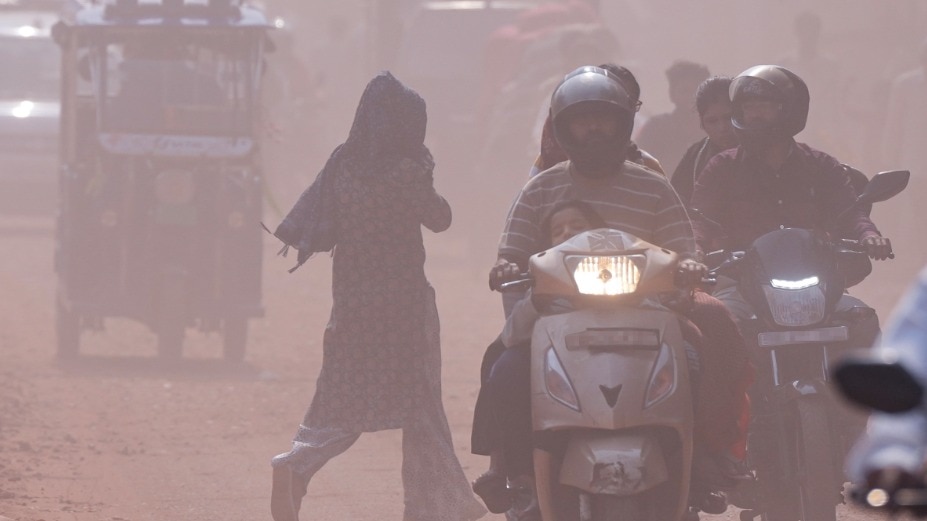
Delhi's brief respite from polluted air has come to an end as the national capital's overall Air Quality Index (AQI) surged to 319 on Thursday, relegating it back into the 'very poor' category. The rise in pollution levels occurred just a day after Delhi recorded an AQI of 299, offering a marginal improvement and bringing the city close to the 'poor' category. However, this relief was short-lived, with pollution spiking across several parts of the capital. By 6:30 am on Thursday, as many as 36 out of Delhi's 58 air quality monitoring stations recorded AQI readings above 300, with IIT Delhi registering the highest reading at 413, placing it in the 'severe' category. Jaffarpur and ITO followed closely with readings of 394 each, while Burari Crossing reported a reading of 378. Other areas also experienced high pollution levels, with Pusa Road and Dwarka recording AQI readings of 382 and 376, respectively. JNU registered 376, while Mathura Road recorded 363.
Delhi has been grappling with worsening air quality since Diwali, with stubble burning in neighboring states contributing to the deterioration in air quality. Unfortunately, weather conditions are not expected to offer much relief over the coming days. The maximum temperature is forecast to remain between 27 and 30 degrees Celsius, while minimum temperatures are likely to range between 14 and 17 degrees Celsius until November 15. For Thursday, the maximum temperature is anticipated to settle between 27 and 29 degrees Celsius, with the minimum likely to remain between 15 and 17 degrees Celsius. Over the next two days, maximum temperatures are expected to range between 28 and 30 degrees Celsius, while minimum temperatures are likely to stay between 15 and 17 degrees Celsius. Earlier, the India Meteorological Department had forecast no rainfall in Delhi between November 10 and 15, indicating little prospect of weather-related relief from pollution. Despite an approaching Western Disturbance, temperatures were expected to see little change.