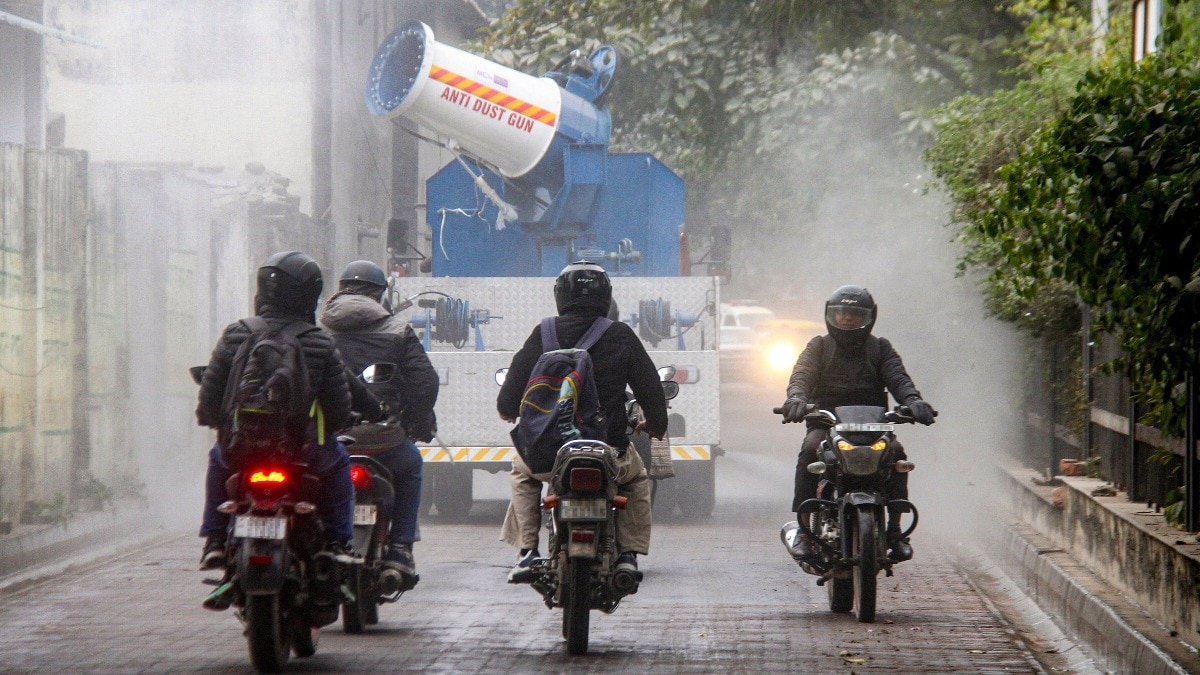
Delhi experienced a minor increase in air pollution levels on Wednesday, with the overall Air Quality Index (AQI) rising to 214 from Tuesday's reading of 204. This slight deterioration came after the city recorded its cleanest air this month on Tuesday, with an AQI of 204. The increased pollution levels placed Delhi in the 'poor' category, a marginal improvement compared to the 'very poor' and 'severe' categories it had reached earlier in November. Out of the 58 air quality monitoring stations that recorded data, 36 reported 'poor' air quality, while 21 were in the 'moderate' category. However, several pockets, such as Uttam Nagar, continued to report high pollution levels, with an AQI of 399, just two points below the severe threshold of 401.
The improvement in air quality observed on Tuesday was attributed to favorable meteorological conditions, including northwesterly winds and a mixing depth of around 1,500 metres, which helped disperse pollutants. These favorable conditions led the Commission for Air Quality Management (CAQM) to revoke Stage III restrictions under the Graded Response Action Plan (GRAP) across Delhi-NCR on Tuesday. However, restrictions under GRAP Stages I and II will continue to remain in force across the region. Authorities have been directed to ensure strict implementation of existing pollution-control measures to prevent further deterioration in air quality.
Meanwhile, the Delhi Traffic Police issued 3,048 challans for pollution-related violations during a week-long enforcement drive across the Northern Range between November 8 and Sunday. The primary violations involved motorists not carrying valid Pollution Under Control Certificates (PUCCs).
Delhi witnessed a brief improvement in air quality on Tuesday, with the AQI falling to 204, its cleanest reading this month. However, the city experienced a slight deterioration in air quality on Wednesday, with an overall AQI of 214. This minor increase placed Delhi in the 'poor' category, a level that is relatively better than the 'very poor' and 'severe' categories it had reached earlier in November. The improvement observed on Tuesday was attributed to favorable meteorological conditions, including northwesterly winds and a mixing depth of around 1,500 metres, which helped disperse pollutants.
Out of the 58 air quality monitoring stations that recorded data, 36 reported 'poor' air quality, while 21 were in the 'moderate' category on Wednesday. However, several pockets, such as Uttam Nagar, continued to report high pollution levels, with an AQI of 399, just two points below the severe threshold of 401. The Delhi Traffic Police issued 3,048 challans for pollution-related violations during a week-long enforcement drive across the Northern Range between November 8 and Sunday, primarily involving motorists not carrying valid Pollution Under Control Certificates (PUCCs).
Restrictions under GRAP Stages I and II will continue to remain in force across Delhi-NCR, as authorities work to ensure strict implementation of existing pollution-control measures to prevent further deterioration in air quality.
Delhi experienced a slight increase in air pollution levels on Wednesday, with an overall AQI of 214. This deterioration came after the city recorded its cleanest air this month on Tuesday, with an AQI of 204. Despite the improvement, several pockets, such as Uttam Nagar, continued to report high pollution levels, with an AQI of 399, just two points below the severe threshold of 401.
Out of the 58 air quality monitoring stations that recorded data, 36 reported 'poor' air quality, while 21 were in the 'moderate' category on Wednesday. The area around India Gate recorded an AQI of 112, while the reading near Jawaharlal Nehru Stadium stood at 152. The area around Indira Gandhi International Airport recorded an AQI of 197. In comparison, the reading near India Gate on Tuesday was significantly lower, at 106.
The improvement in air quality observed on Tuesday was attributed to favorable meteorological conditions, including northwesterly winds and a mixing depth of around 1,500 metres, which helped disperse pollutants. These favorable conditions led the Commission for Air Quality Management (CAQM) to revoke Stage III restrictions under the Graded Response Action Plan (GRAP) across Delhi-NCR on Tuesday. However, restrictions under GRAP Stages I and II will continue to remain in force across the region. Authorities have been directed to ensure strict implementation of existing pollution-control measures to prevent further deterioration in air quality.