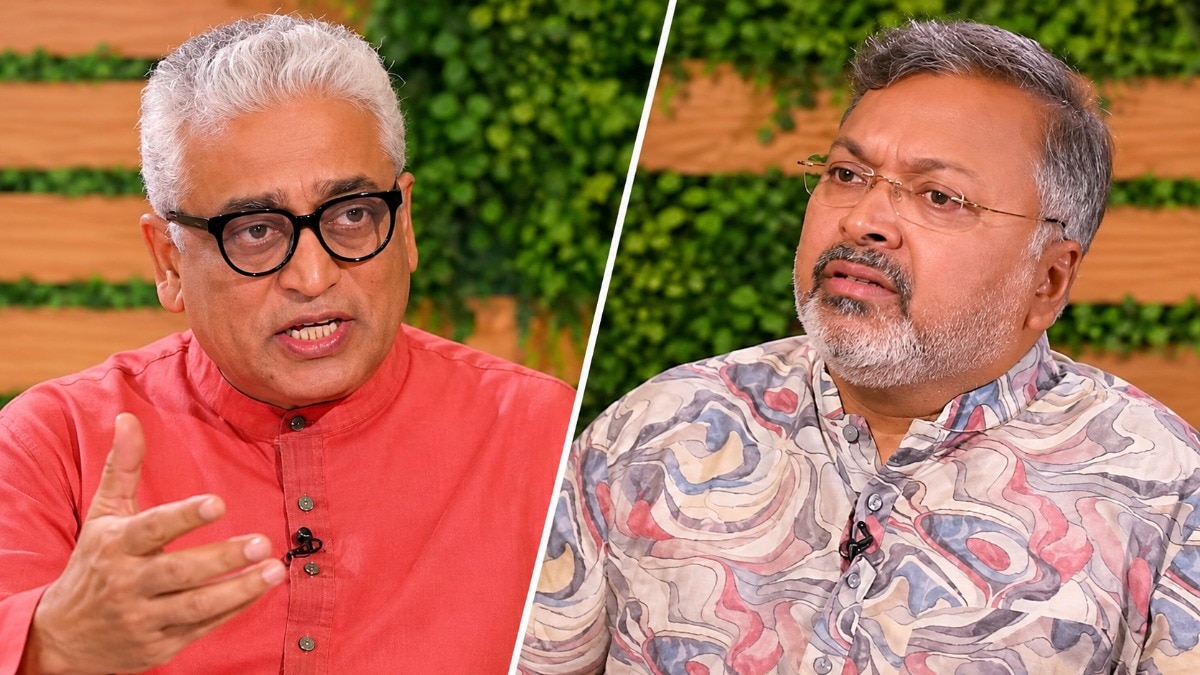
In a recent interview, renowned mythologist Devdutt Pattanaik sparked a debate by questioning the notion that Hinduism offers women a prominent position due to its pantheon of female deities. Critics argue that his assertion that women are not worshipped in India overlooks the country's extensive traditions of goddess worship, including prominent Shakti shrines and temples where female deities serve as principal gods. Pattanaik criticized the growing absence of female deities from popular representations of Hindu gods, citing examples such as a Ram temple without Sita and Krishna without Radha in contemporary temple imagery. The debate has raised questions about the relationship between goddesses' representation and women's position in religious and social life.
Furthermore, Pattanaik argued that the depiction of goddesses had undergone a transformation over time, with the erotic goddess becoming the romantic goddess, and eventually gods being depicted as solitary figures. He attributed some of these changes to the influence of Buddhism and Jainism, claiming that religious traditions evolved with changing social and economic circumstances. However, his assertions have faced criticism from those who argue that they overlook India's extensive and continuing traditions of goddess worship.
Critics have pointed to the prominence of Durga, Kali, Lakshmi, and Saraswati in household worship, festivals, and religious practices across regions. They contend that the absence of a female consort in representations of male deities cannot establish that goddess worship has diminished or that women are not worshipped. Some have accused Pattanaik of selectively overlooking temples dedicated to female deities and argued that goddesses are widely worshipped across India. The controversy raises questions about the politics of representation and the role of mythology in reflecting society's values and aspirations.