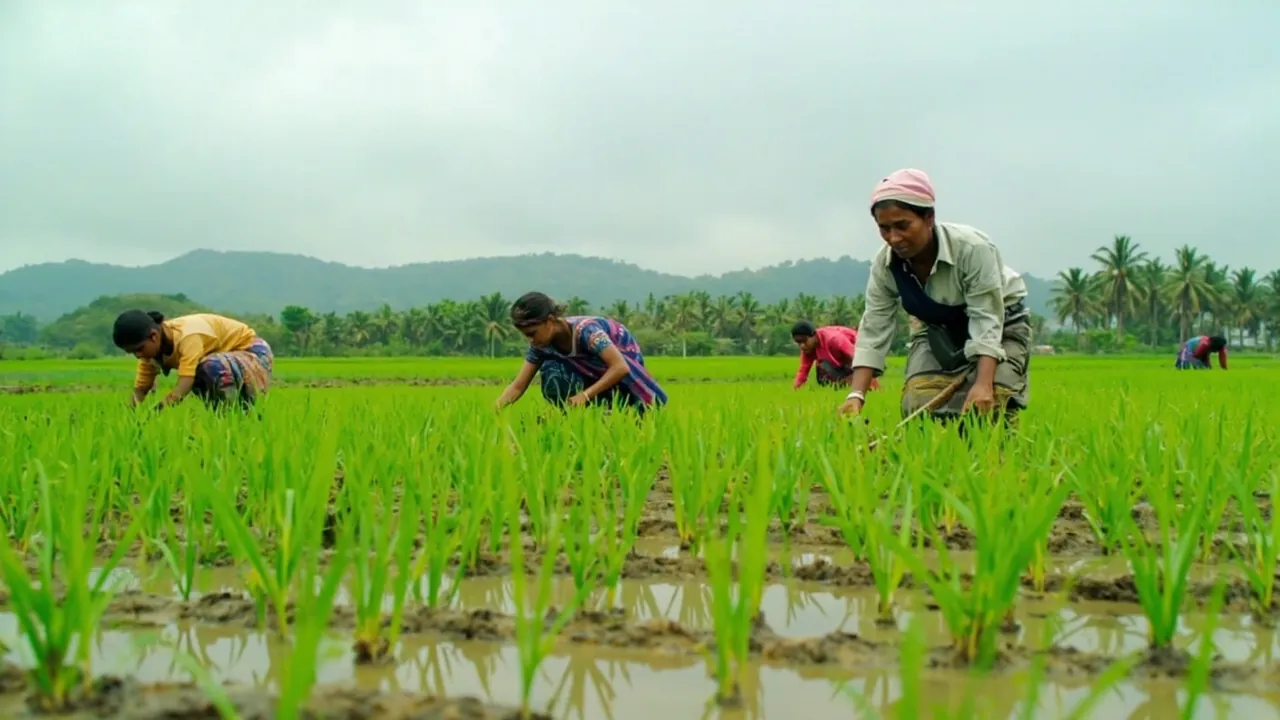
In the rural district of Sindhudurg, Maharashtra, a group of 65-year-old women farmers have revolutionized their rice cultivation practices. For years, Supriya Gawade and Kavita Manjrekar, along with other female farmers in Talekarwadi village, have been battling labor shortages, rising costs, and unpredictable rainfall. However, this season, they adopted the System of Rice Intensification (SRI), a method that promises higher yields and sustainable farming.
The SRI method involves changing how rice seedlings are planted, watered, and nourished. Instead of planting multiple older seedlings together, farmers plant a single young seedling, spaced about 25 centimeters apart in rows. This allows the plants to grow more tillers, or stems that can produce grain-bearing panicles. The method also involves mechanical weeding and managing nutrients without keeping fields continuously flooded.
According to a report by the United Nations Development Programme (UNDP) India, this initiative has recorded an average rice yield of 55.2 kg per 100 square meters under SRI, compared with 34.9 kg from traditionally cultivated plots. This represents an increase of about 58% in the field trials. The Indian Council of Agricultural Research (ICAR) has also documented potential benefits of modified SRI, including grain-yield increases of 36% to 49%, water savings of 22% to 35%, and seed savings of about 90%.
The transition was not immediate. The women had followed conventional rice-growing practices for years and were unsure whether planting fewer seedlings farther apart would leave too much room for weeds or affect the crop. However, through meetings, explanations from project workers Nutan Sawant and Yugandhara Kamble, and group farming, they overcame their doubts and adapted to the new method. They also made practical adjustments to suit local conditions, such as modifying cono weeders and developing a measuring scale marked at 25-centimeter intervals.
As more women in the area learn about SRI, it is hoped that this sustainable farming method will help them cope with the challenges of modern rice cultivation and secure their livelihoods.