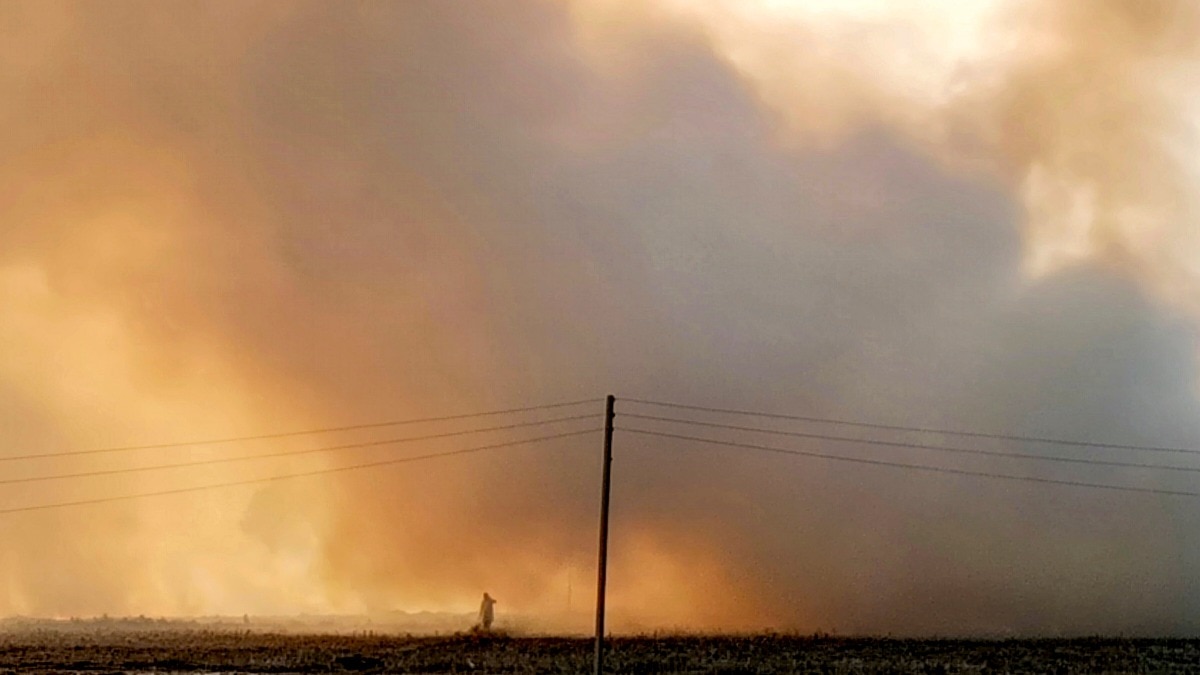
Bathinda in the Indian state of Punjab has been declared the world's most polluted city, according to air quality data from AQI.in on Thursday. The city's Air Quality Index (AQI) peaked at an alarming 1,048, surpassing Meerut in Uttar Pradesh (680) and Sirsa in Haryana (636). This deterioration in air quality is not due to firecrackers, as was initially speculated after Diwali celebrations. Instead, the continued burning of paddy stubble across Punjab and unfavorable weather conditions are primarily responsible for the increased pollution levels. These factors make it difficult for pollutants to disperse, contributing significantly to the pollution burden. All 10 of the world's most polluted cities on Thursday were in India, with a majority located in Punjab, Haryana, and Uttar Pradesh, according to the AQI.in ranking.
Punjab's paddy harvesting season is still ongoing, and farmers are burning leftover stalks to clear their fields before sowing wheat crops. This practice releases large amounts of smoke and fine particles, including PM2.5, which can travel across districts and worsen air quality. According to the Commission for Air Quality Management (CAQM), Punjab recorded 4,459 farm-fire incidents up to November 8, with Bathinda accounting for 406 of these, making it the fourth-worst affected district in the state. The problem intensified around Diwali, with Punjab recording 1,152 farm fires on November 8 alone, and Bathinda accounting for 132 incidents.
The weather conditions in Bathinda also play a significant role in exacerbating the pollution issue. During November, falling night-time temperatures and relatively stable atmospheric conditions can prevent polluted air from rising and mixing with cleaner air above, trapping pollutants closer to the ground. Light winds can further slow the movement of polluted air out of an area, allowing smoke to accumulate and pollution levels to rise. Bathinda's weather on Thursday was marked by smoky haze, with light winds persisting during the morning. As agricultural fires continue and conditions are not always favorable for pollution dispersal, smoke can build up and further worsen air quality. The high pollution levels in Bathinda serve as a stark reminder that India's pollution problem extends beyond firecrackers, encompassing seasonal farm burning and unfavorable weather.