In a twist reminiscent of the Vietnam War, President Donald Trump's conflict with Iran has entered its eighth month without producing a decisive military victory. This development mirrors the Kissingerian maxim that a guerrilla army wins if it does not lose, and a conventional army loses if it does not win. On November 9, Trump declared the Iran war to be "militarily effectively over" during a White House briefing with Qatar's Prime Minister Sheikh Mohammed bin Abdulrahman Al Thani. However, Tehran has managed to secure a Kissingerian victory by expanding the conflict across West Asia, refusing to surrender, and closing the Strait of Hormuz.
The Iran imbroglio has taken a toll on Trump's administration, with the November 3 midterm elections resulting in a Blue Tsunami, with Democrats taking control of both the House and Senate. With the new Congress convening on January 3, Trump has a two-month window to take further action. The US currently has three carrier strike groups with nearly 200 aircraft in the Indian Ocean region, but achieving any of the four broad objectives Trump had when he began bombing Iran in February 2019 appears unlikely.
In a lengthy post following the apparent defeat, US Vice President JD Vance acknowledged the loss and attributed it to the Iran War. To extricate himself from what has been termed the Carter Trap, Trump may have to accede to seven preconditions reportedly outlined by Iran in talks with Qatari PM Al Thani in September. These conditions include an end to hostilities on all fronts, the release of frozen assets, lifting the naval blockade, withdrawal of US air and naval forces, reparations for war damages, and an end to hostile rhetoric against Tehran.
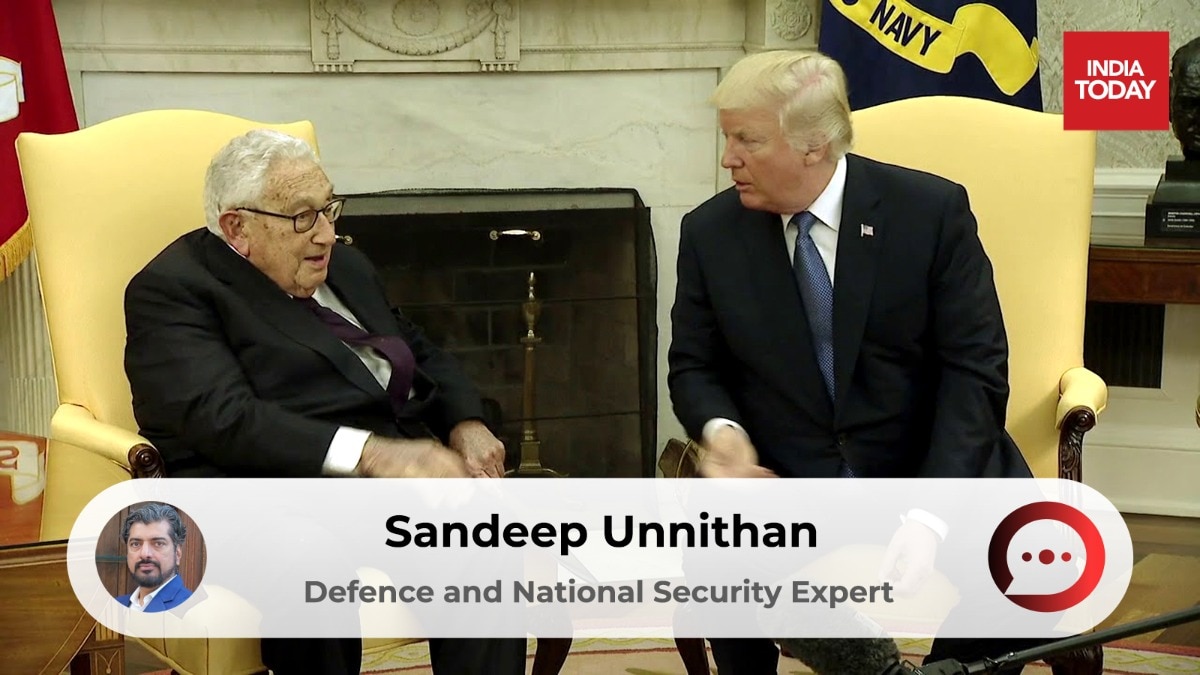
Trump faces a unique challenge compared to previous US conflicts, as he opted for military and economic pressure rather than a land invasion with soldiers on the ground. This means that should the US choose to exit the conflict, there will be no publicly humiliating spectacles like the rooftop evacuation of US nationals in Saigon, 1975, or the chaotic exit from Bagram airbase in 2021. Henry Kissinger, whom Trump described as a close friend and a man he has great respect for, may serve as a guiding light as Trump navigates this complex situation. Kissinger intensified the bombing of Hanoi and bombed neighboring Cambodia during his tenure as Nixon's Secretary of State and National Security Adviser, ultimately winning the Nobel Peace Prize in 1973 for ending the Vietnam War, a prize that remains one of the most controversial ever awarded. Trump has expressed a desire to win the Nobel Peace Prize, a goal that may still be within reach if he can end the Iran war successfully.