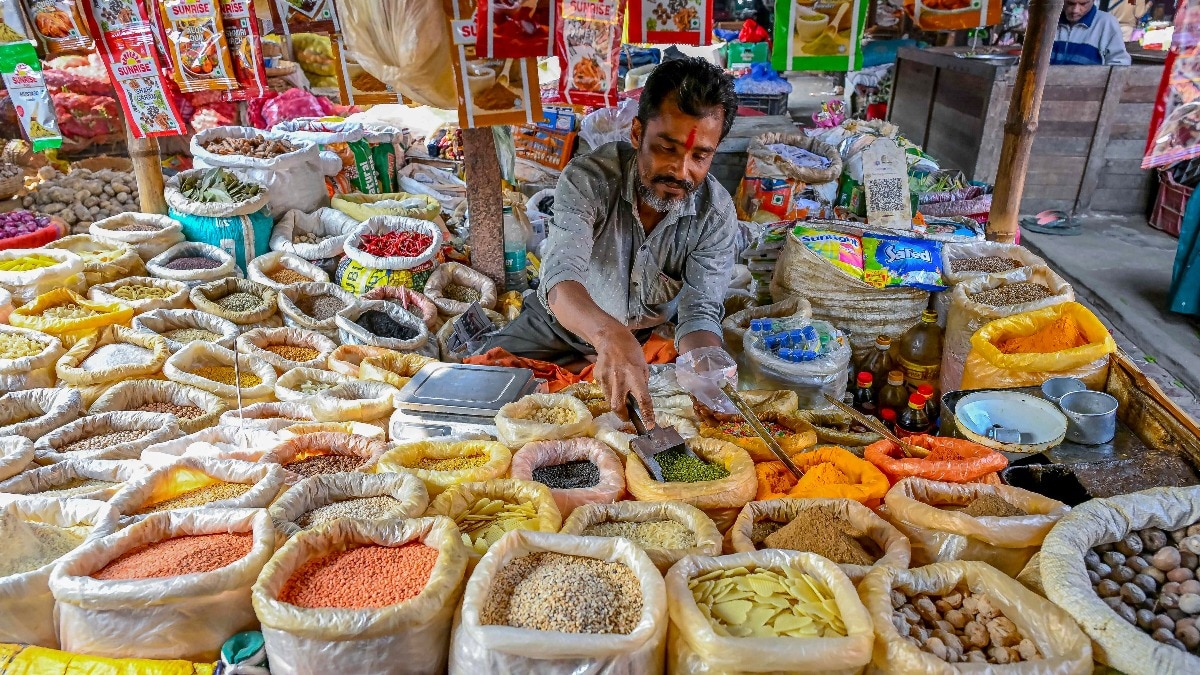
Millions of Indian households are grappling with escalating grocery costs as essential commodities take up a larger share of family budgets. With the cost of goods rising at the wholesale level, families are faced with tough choices - buy less or switch to cheaper alternatives. In October, India witnessed a sharp rise in wholesale inflation, reaching 12.3%, marking the second consecutive month in double digits. This upward trend is supported by the findings of a LocalCircles survey conducted across 326 districts between September 18 and November 10. According to the survey, 98% of respondents reported increased spending on essential commodities compared to a year ago, with 79% indicating an increase of at least 15%. With retail inflation also breaching the Reserve Bank of India's upper tolerance limit in October, the financial strain on households could intensify. The LocalCircles survey indicates that this increase in household expenditure is not limited to specific families or commodities but is widespread across various essential categories, leaving families with little room for substitution.
Higher prices are no longer just causing households to postpone discretionary purchases; they are affecting consumption itself. A LocalCircles survey reveals that 74% of respondents are reducing expenditure on activities such as eating out, shopping, and entertainment, while half report purchasing smaller quantities of essential commodities. More significantly, 39% report consuming less milk, dairy products, or other nutritious foods, with an equal proportion buying fewer fruits and vegetables. In response to mounting expenses, 39% are dipping into savings or borrowing money, while 37% are switching to cheaper alternatives. This shift in consumption patterns suggests that families are feeling the pinch of rising prices across multiple essential categories.
The LocalCircles survey findings indicate that the increase in household expenditure is not confined to a particular category of essentials but is widespread. Ghee, butter, and edible oils top the list of commodities experiencing significant price increases, followed by fresh vegetables, rice, wheat, and other cereals, milk and dairy products, fresh fruits, and pulses and dals. With prices rising simultaneously across several essential categories that form the foundation of a household's monthly consumption, families have limited room for substitution. This helps explain why the increase in household expenditure reported by consumers is considerably higher than the headline retail inflation rate. The survey offers an indication of how the cumulative rise in essential commodity prices is affecting household finances.