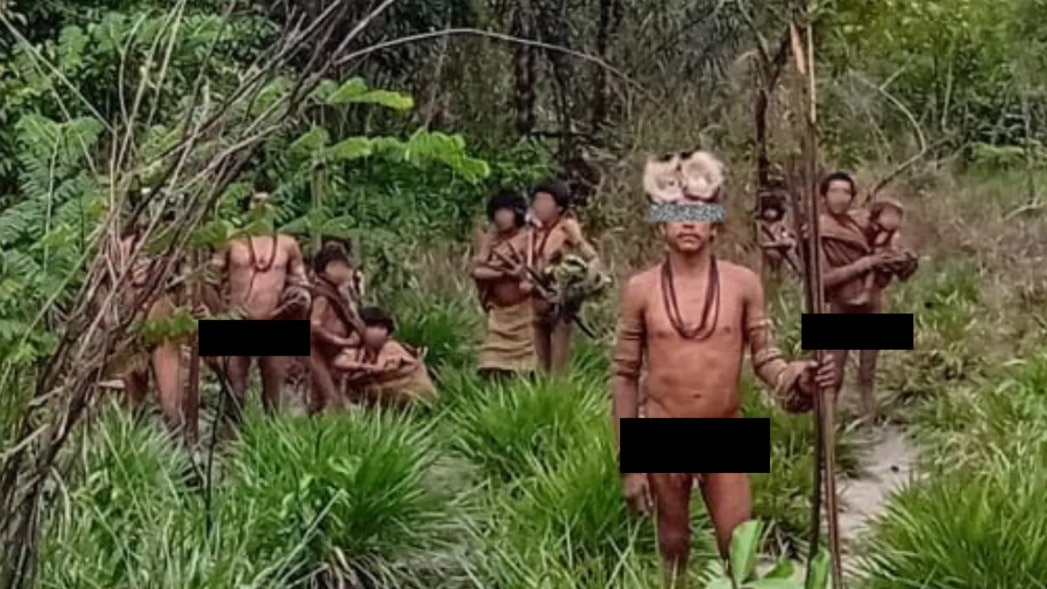
An uncommon incident in the Amazon rainforest has sparked concerns over the precarious situation of Brazil's secluded Awa Indigenous community. Approximately 20 members of this tribe, who have maintained distance from outsiders for decades, approached a government team and requested food, an interaction that advocates suggest may indicate growing pressure on their forest habitat. The Awa, Tupi-Guarani people residing in northwestern Maranhao, consist of some individuals who persist in voluntary isolation.
On Monday, rare footage of this encounter in the northeastern Brazilian state of Maranhao was shared by Survival International, a UK-based organization advocating for Indigenous rights. Described as a "historic encounter," the group stated that the Awa might have solicited food due to the increasing encroachment of outsiders onto their territory. Illegal loggers, hunters, miners, and ranchers have reportedly been invading the community's land, leaving them with diminishing rainforest acreage, according to reports. Members from neighboring Guajajara community provided food to the Awa, who carried it back into the forest as per local Indigenous leaders.
Brazil's Indigenous affairs agency Funai is reviewing videos and social media accounts depicting isolated Awa people interacting with a village situated in the Arariboia Indigenous Land. Funai has activated a contingency plan to minimize health risks if contact occurs. It emphasized that the government does not seek contact with the community and adheres to a policy of non-contact.
Survival International released the footage at the request of the Guardians of the Amazon, an Indigenous group combating illegal logging and cattle ranching. The location or date of the footage could not be independently authenticated, nor were any older versions found posted online prior to Tuesday. Caroline Pearce, Survival International director, stated that the uncontacted Awa are under extreme pressure as intruders encroach from all sides of their territory, driving them into an ever-shrinking Amazonian rainforest sanctuary surrounded by destruction.
Survival International identified 196 uncontacted Indigenous groups across 10 countries in South America, Asia, and the Pacific, with almost 95% residing in the Amazon, including 124 in Brazil. COAPIMA, an Indigenous organization, urged careful handling of the encounter to prevent unnecessary exposure of isolated communities to diseases and other threats. The Awa is among the last hunter-gatherer communities in the country, with their survival closely tied to the forest for food through hunting and gathering. The exact population of the Awa living in isolation remains unknown, but Brazil's Indigenous Peoples in Brazil database recorded around 520 Awa in Maranhao in 2020, including those who have made contact with the outside world. An unspecified number continues to live in voluntary isolation. The community's history of isolation is rooted in colonial expansion, violence, and loss of forest land that forced many Aw to abandon settlements and adopt a nomadic lifestyle. In the subsequent decades, logging, mining, ranching, and deforestation further jeopardized their traditional territory.