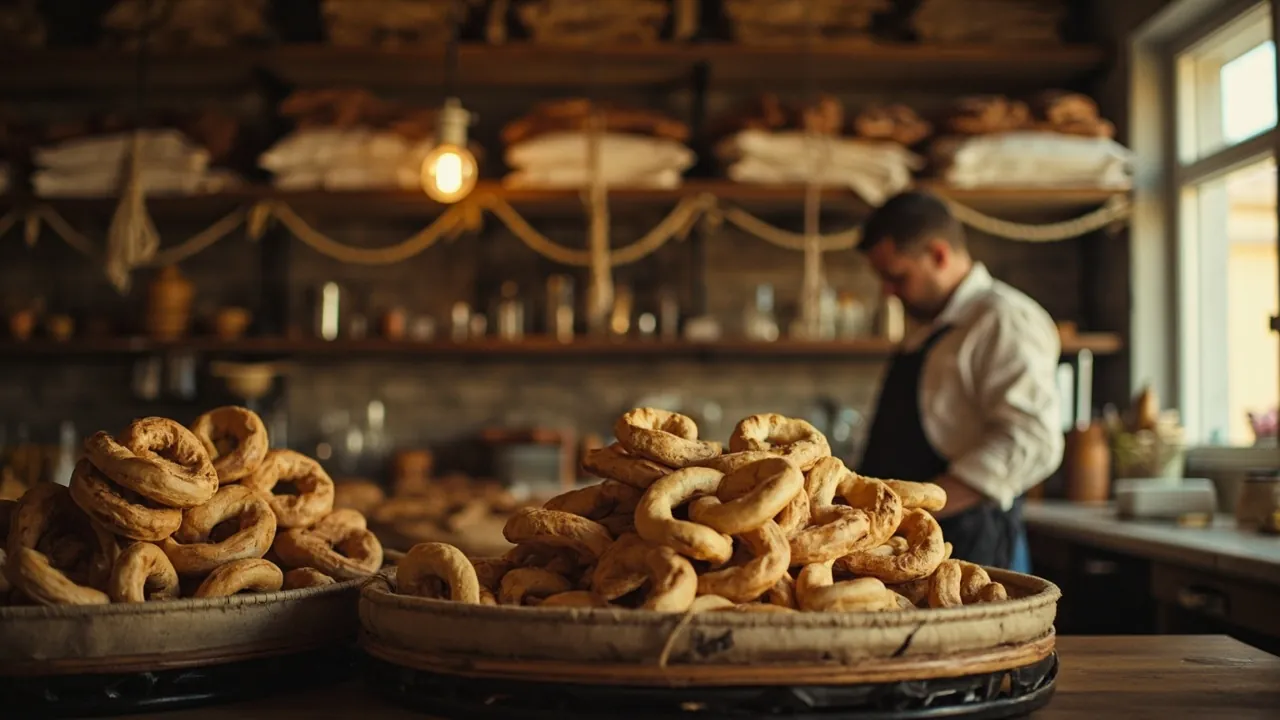
In a unique blend of tradition and modern practicality, the Italian region of Puglia has reintroduced Friselle, a rock-solid, ring-shaped bread that boasts an extraordinary shelf life of up to a year. This ancient bread, baked twice to remove all moisture, is making a comeback as an emergency food staple in today's world.
Originating from Puglia, the heel of Italy's boot, Friselle are simple yet packed with history. Made primarily from durum wheat flour or barley, water, salt, and yeast, these circular loaves are known for their hard exterior and porous interior. Despite their unassuming appearance, they pose a challenge to those who bite into them without soaking them first.
The secret behind Friselle's longevity lies in their double-baked texture. After the initial baking, the bread is sliced open and returned to the oven for a second round of drying. This meticulous process eliminates any chance of mold growth, making it an ideal food preservation method even before refrigerators were invented.
Friselle have deep roots in southern Italy's coastal life, particularly among sailors, farmers, and fishermen who needed durable bread that could withstand long sea voyages. Their ring shape allowed them to be easily stored on ropes, saving space and keeping things tidy aboard ships. Today, Friselle are enjoyed as a summer favorite, transforming simple ingredients like tomatoes, olive oil, salt, and herbs into vibrant meals.
In recent times, Friselle have transitioned from necessity to tradition, with modern bakeries offering variations made from whole-wheat, spelt, and multigrain flours. Despite their humble origins, these ancient loaves are now prized for their unique taste and versatile use in various regional cuisines across southern Italy. Whether soaked in water, milk, or used as a base for salads like Tuscany's panzanella, Friselle continue to captivate food lovers with their timeless appeal.