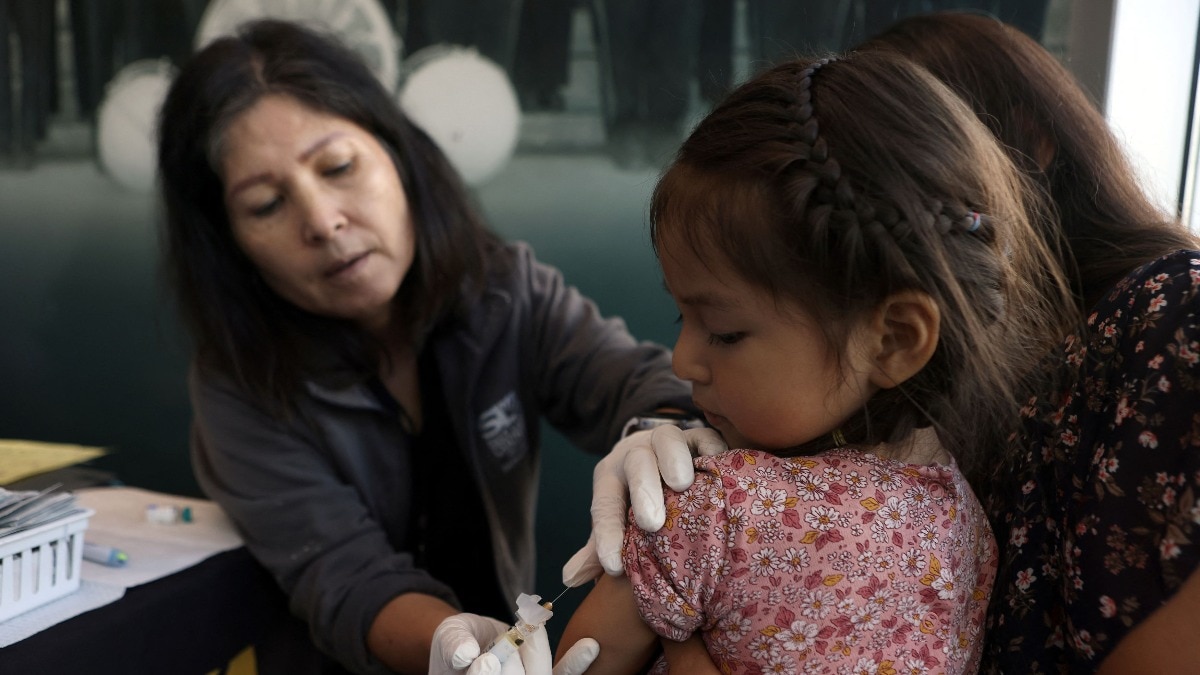
After nearly two decades of elimination, measles has made a comeback in the United States, sparking concerns over a potential public health crisis. The Pan American Health Organization (PAHO), a regional arm of the World Health Organization (WHO), announced on Tuesday that the US has lost its measles-free status due to sustained transmission within the country. As of November 13th, the Centre for Disease Control (CDC) reported over 5,400 confirmed measles cases in 2026, more than double the number recorded in 2025, with at least 10 deaths.
The resurgence of measles in a country known for its robust healthcare system serves as a stark reminder that infectious diseases do not recognize borders or socioeconomic status. Measles, once thought to be eradicated in the US, has found its way back due to falling vaccination rates and growing vaccine hesitancy. The WHO recommends a vaccination coverage of at least 95% to prevent sustained transmission; however, in the 2025-26 school year, MMR vaccination coverage among US kindergarteners dropped from 95.2% to 92.4%, leaving approximately 280,000 children vulnerable to measles.
To combat this resurgence, public health authorities are urging a renewed focus on vaccination and awareness campaigns. The US must achieve and maintain 12 consecutive months of interrupting endemic transmission to regain its measles-free status. However, the immediate priority lies in reversing the decline in immunization coverage, which has been driven by vaccine hesitancy and misinformation. The ongoing measles outbreak in Bangladesh, where a mass MMR immunization program was not implemented between 2020 and 2026, serves as a grim reminder of the consequences of insufficient vaccination efforts.