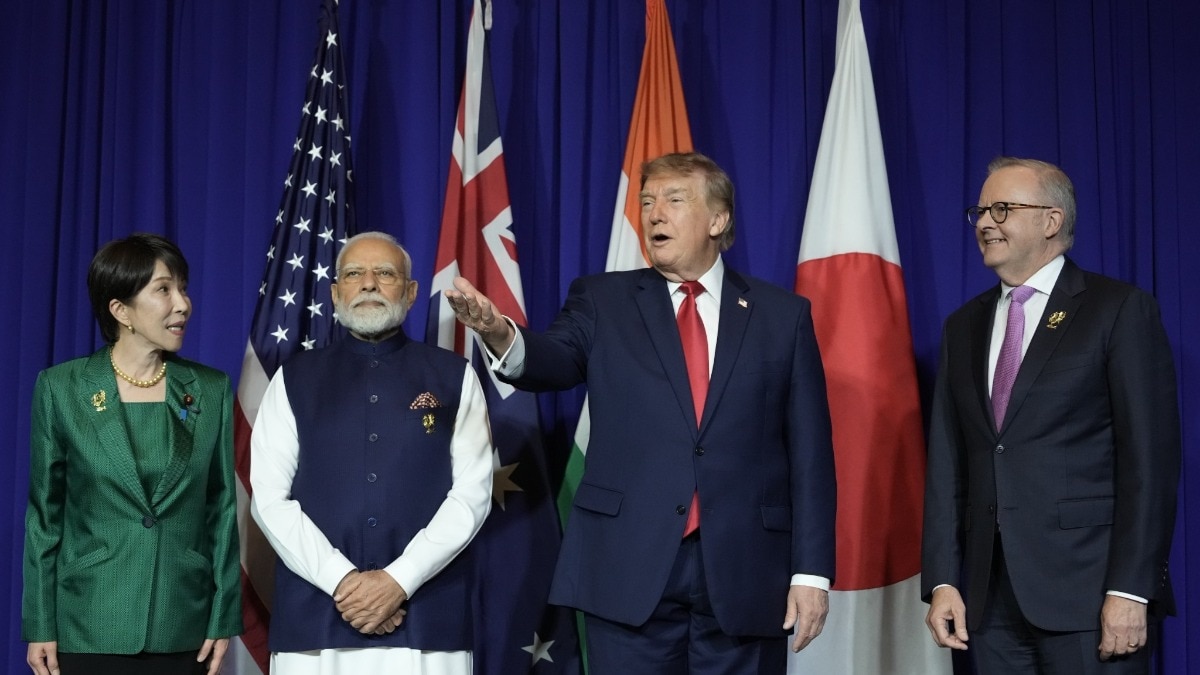
Four democratic nations - the United States, India, Australia, and Japan - joined forces in a significant move on Tuesday at a summit in Manila, aiming to tackle the challenges of the modern era and plan for the future. The Quadrilateral Security Dialogue (Quad) was rekindled after two years of dormancy, with the members expressing concerns over China's growing influence in the region. US President Donald Trump emphasized cooperation among the Quad nations in critical areas such as artificial intelligence, semiconductors, and critical minerals to secure the Indo-Pacific's technological future. Experts attribute this strategic alliance to shared apprehensions about China's increasing economic, military, and technological dominance, as well as its interferences in regional affairs. The Quad has never been portrayed as an anti-China front, but the grouping's relevance extends beyond diplomatic engagements and meetings, focusing on economic security and strategic competition. Prime Minister Narendra Modi, Trump, Japanese Prime Minister Sanae Takaichi, and Australian Prime Minister Anthony Albanese attended their first leaders' summit in two years at this meeting. The timing of the Quad summit raised questions about Washington's commitment to the grouping as Trump was set to meet with Chinese President Xi Jinping and Russian President Vladimir Putin just two days later. However, experts believe that the grouping's significance goes beyond these diplomatic engagements.
In Manila, Trump stressed AI, which he referred to as Super Intelligence, at the core of the Quad's agenda, describing it as a transformation "bigger than the Industrial Revolution and the internet." The US President also announced plans for more than $85 million in technical and financial assistance to expand access to trusted AI technology across the Indo-Pacific. This initiative includes the Quad AI Accelerator, aimed at supporting technological cooperation among the four countries and their regional partners, promoting AI innovation, and strengthening cooperation on artificial intelligence across the Indo-Pacific. The Quad nations are also working to identify vulnerabilities and potential chokepoints in semiconductor and AI supply chains before disruptions affect industries dependent on these technologies.
The Quad's push for critical technologies such as AI, semiconductors, and rare earths aims to reduce dependence on China, which dominates the manufacturing and supply chains of these key constituents. These technologies are essential for various sectors, including smartphones, electric vehicles, defence equipment, and advanced weapons. The Quad nations hope to secure their supplies, develop their own technologies, and prevent China from weaponizing technology economically and strategically by working together on new-age tech.