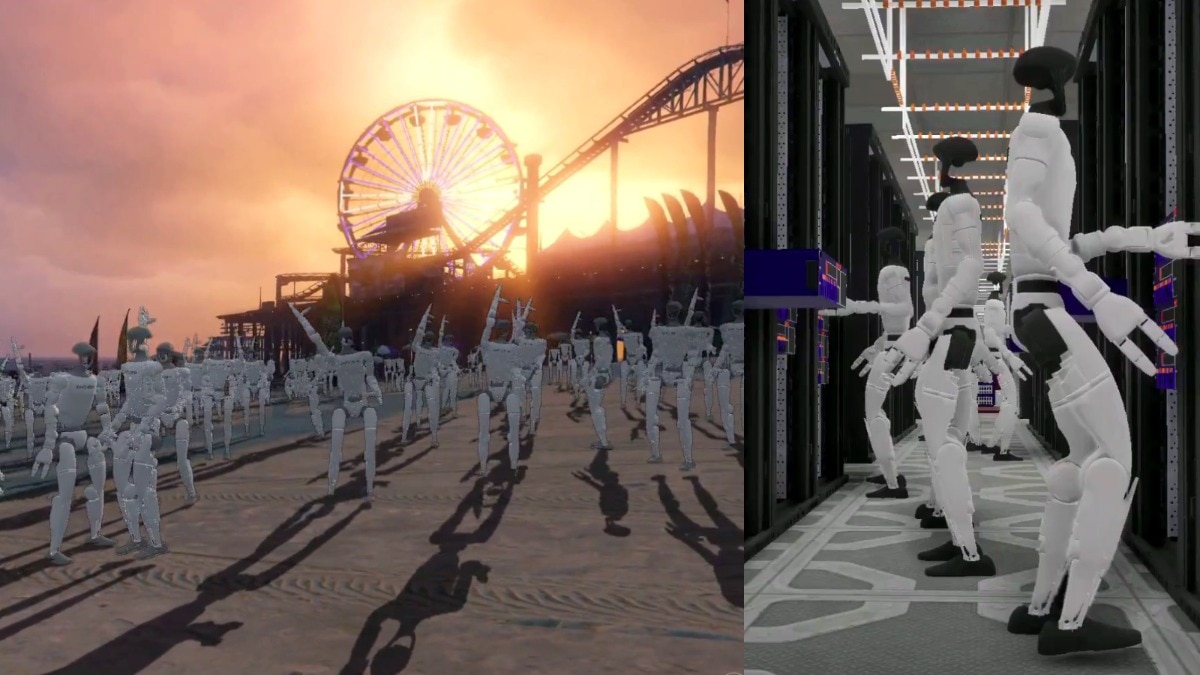
In a groundbreaking development, startup Melty, founded by David Miller, is transforming video games into laboratories for training robots. The innovative platform, Melty Gym, allows researchers to integrate their own robot models into existing games and customize environments, objectives, and interactions for training and evaluation purposes. During its November 13 demonstration, humanoid robots were seen navigating Grand Theft Auto V (GTA V), performing tasks such as opening car doors and driving through the virtual city. Another sequence showcased multiple humanoids working on server racks inside a custom-built data centre environment. By using these virtual worlds for repeated experiments, AI models can learn through trial and error without the need for physical robots for every attempt. This approach could potentially reduce costs associated with training physical robots and offer developers an efficient way to test different scenarios without constructing every training environment from scratch. However, it's important to note that a robot's performance in a virtual game does not automatically guarantee its ability to perform the same tasks in reality due to differences in physical objects, friction, balance, sensors, and unpredictable surroundings. Melty Gym is currently in research preview, with results demonstrating the reliability of skills learned in its virtual environments transferring to physical robots yet to be published.
---
In an intriguing move, a startup called Melty is leveraging video games as training grounds for robots. Founded by David Miller and originally designed for modifying and combining video games, the latest experiment from Melty delves into robotics. The new platform, Melty Gym, enables researchers to incorporate their own robot models into existing games and tailor environments, objectives, and interactions for training and evaluation purposes.
During its launch demonstration on November 13, humanoid robots were observed performing tasks inside Grand Theft Auto V (GTA V), such as opening car doors and driving through the virtual city. Another sequence depicted multiple humanoids working on server racks inside a custom-built data centre environment. The goal is to use these virtual worlds for repeated experiments, enabling AI models to learn through trial and error without requiring physical robots for every attempt.
This method could potentially reduce costs associated with training physical robots and provide developers with an efficient way to test different scenarios without constructing every training environment from scratch. However, it's crucial to remember that a robot's ability to complete tasks in a virtual game does not guarantee its capacity to perform the same tasks in reality due to differences in physical objects, friction, balance, sensors, and unpredictable surroundings. Melty Gym is currently in research preview, with results demonstrating the reliability of skills learned in its virtual environments transferring to physical robots yet to be published.
---
Startup Melty, founded by David Miller, is revolutionizing robotics by transforming video games into training grounds for robots. Its innovative platform, Melty Gym, lets researchers put their own robot models into existing games and customize environments, objectives, and interactions for training and evaluation purposes. During its November 13 demonstration, humanoid robots were seen navigating Grand Theft Auto V (GTA V), performing tasks such as opening car doors and driving through the virtual city. Another sequence showcased multiple humanoids working on server racks inside a custom-built data centre environment.
By using these virtual worlds for repeated experiments, AI models can learn through trial and error without needing physical robots for every attempt, potentially reducing costs associated with training physical robots and offering developers an efficient way to test different scenarios without constructing every training environment from scratch. However, it's essential to note that a robot's performance in a virtual game does not automatically guarantee its ability to perform the same tasks in reality due to differences in physical objects, friction, balance, sensors, and unpredictable surroundings. Melty Gym is currently in research preview, with results demonstrating the reliability of skills learned in its virtual environments transferring to physical robots yet to be published.