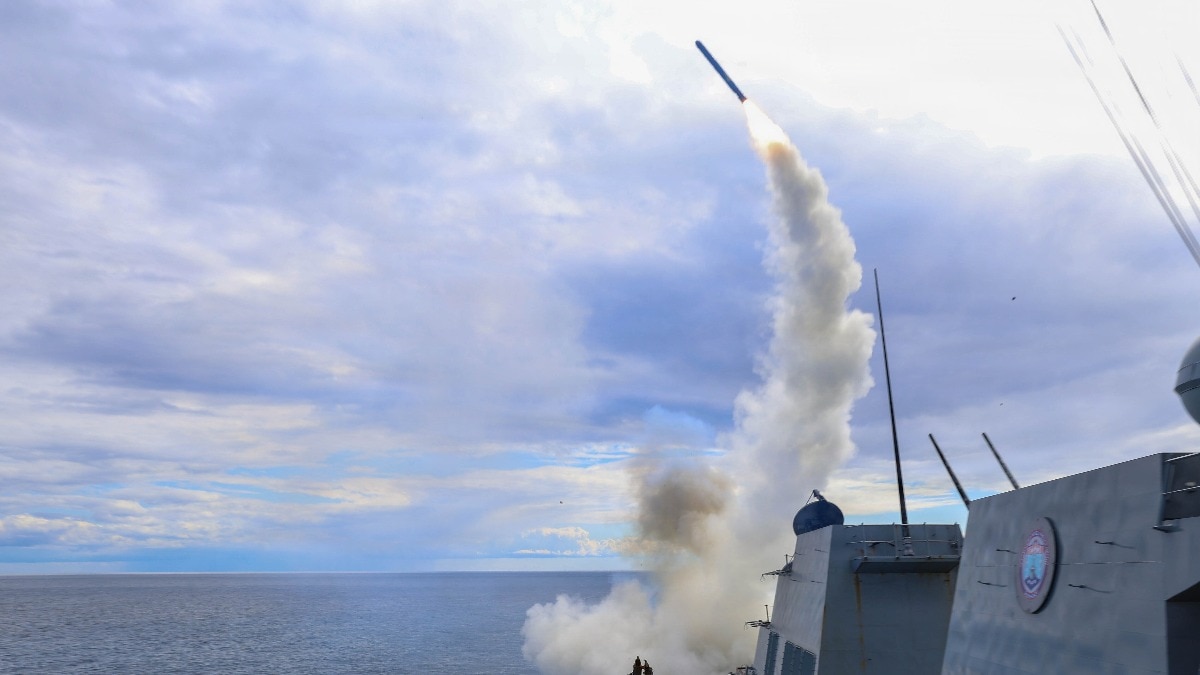
During a Senate Armed Services Committee hearing on Tuesday, November 17, Acting US Navy Secretary Hung Cao disclosed that the US Navy had used expired or unserviceable munitions, including Tomahawk cruise missiles, in its conflict with Iran. These aged weapons were reportedly reactivated by changing their operation codes. The practice, compared to reviving stale bread, was discussed during Cao's testimony.
The revelation comes amidst concerns about the depletion of American missile stocks due to their extensive usage during the ongoing US-Iran war. According to reports in The Washington Post and The Wall Street Journal, more than 1,000 Tomahawk cruise missiles were fired within four weeks of fighting, leaving a significant shortage.
The use of expired munitions raises questions about the safety and effectiveness of these weapons. An expiry date on a missile indicates that its components may no longer meet the manufacturer's standards without further testing. Ageing munitions can suffer from various forms of deterioration, including chemical degradation, damage to electronic components, corrosion, and structural damage, which could affect their launch, flight path, and detonation.
While the Navy has procedures for extending the operational life of its missiles, reactivating an expired missile does not guarantee that every component has been refurbished or that the weapon carries no additional risk. The concerns are not entirely theoretical, with reports suggesting that some refurbished Tomahawks used in previous operations had failed to explode.
The bigger issue is not just the use of older weapons but the fact that the world's most powerful military is drawing on previously unserviceable stockpiles while expending precision weapons faster than its defense industry can replenish them. The US Navy had requested only 57 Tomahawks in its fiscal year 2026 budget, suggesting a significant shortage.