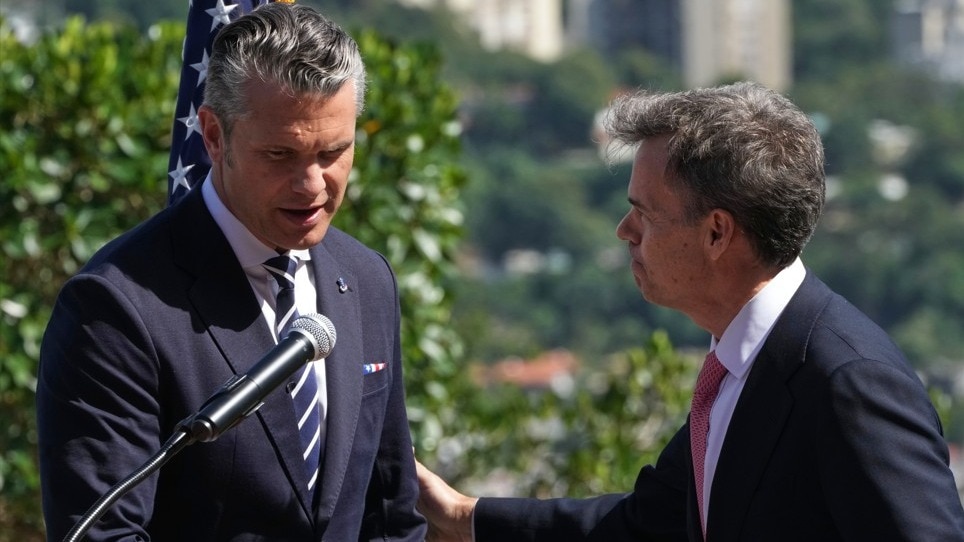
In a significant turn of events, the United States Defense Secretary Pete Hegseth announced on a recent visit to Venezuela that Washington and Caracas have agreed to reestablish military ties. This development comes months after the reported capture of Venezuelan President Nicolas Maduro by US forces in January. The renewed relationship will involve cooperation in training and intelligence sharing, with Hegseth describing Venezuela as having transformed from a perceived aggressive regional threat into a compliant security partner following Maduro's capture.
During his visit, Hegseth also praised the close cooperation with Venezuela's interim President Delcy Rodriguez, stating that it has helped officials stabilize the country and tackle what he called narco-terrorism. Rodriguez welcomed the development, expressing hope that military and technical cooperation between the two countries would reach its highest possible level to address shared security threats.
The visit by Hegseth marks another step in US President Donald Trump's administration's efforts to expand Washington's influence in Venezuela following Maduro's removal from power. This is part of a broader strategy aimed at strengthening America's presence in the Western Hemisphere and intensifying efforts against drug cartels operating across the region.
However, Venezuela continues to face uncertainty over its political future. Rodriguez, a close ally of Maduro, assumed leadership following his capture, but her court-authorized term expired in July. The absence of a date for the next presidential election has left many Venezuelans uncertain about the country's political direction. While Maduro's removal has been welcomed by some, others have criticized the Trump administration for prioritizing the revival of Venezuela's oil industry over concrete steps towards democratic reforms.
The US military has increased its focus on Latin America under President Trump, targeting vessels in the Caribbean Sea and eastern Pacific Ocean allegedly involved in drug smuggling. At least 240 people have been killed since the campaign against suspected "narcoterrorists" began in September 2025. However, US officials have released limited public evidence to substantiate claims that the targeted vessels were carrying drugs.
The Trump administration claims that more than $12 billion, accounting for nearly 99% of the revenue generated from Venezuelan oil sales, has been returned to the country under the energy agreement reached with Rodriguez's government. This figure was cited in a report released earlier this month.