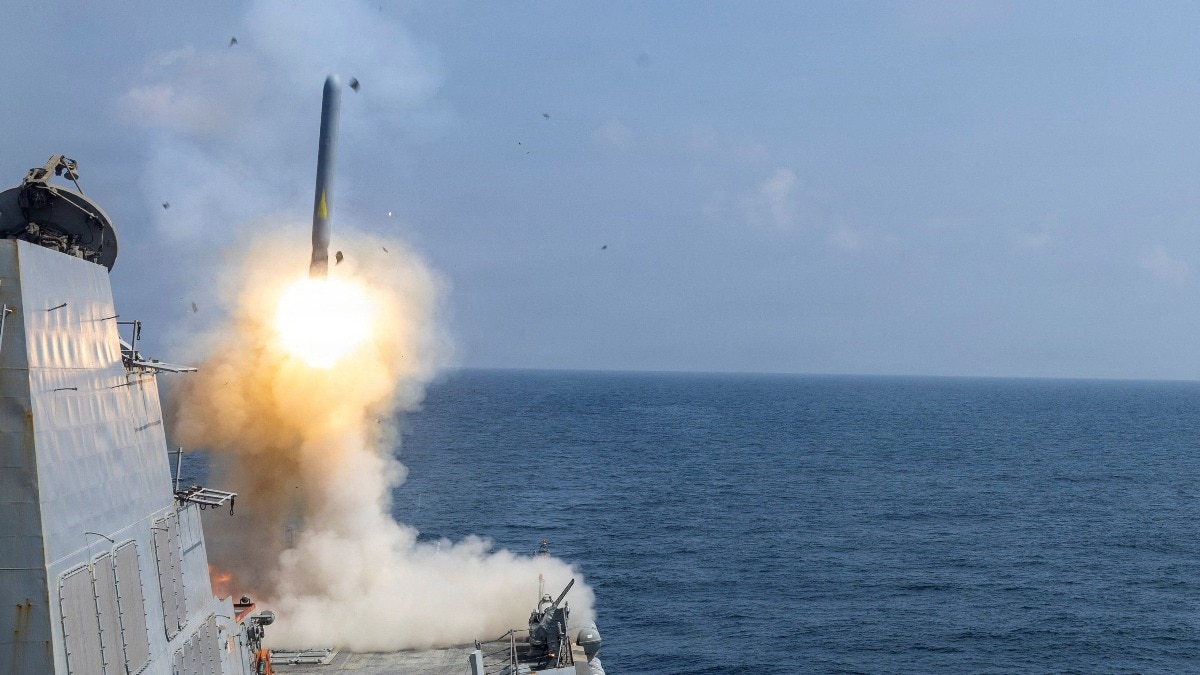
In a significant development on Tuesday, the United States launched airstrikes against an Iranian Revolutionary Guards missile launch site located on Qeshm Island in the Strait of Hormuz. The move was in response to Iran's claim that it had targeted a US military radar system at Bahrain's Sheikh Isa air base earlier in the day. These actions marked another escalation in the nearly nine-month-long conflict that has destabilized the Middle East, disrupted global energy supplies, and pushed up oil prices.
The US military official, speaking on condition of anonymity, stated that the strikes targeted a missile launch site as retaliation for Iran's alleged aggression against US personnel and assets. Reports from Iranian media, citing an official source, indicated that the US attack did not cause any significant damage to infrastructure.
Iran's Islamic Revolutionary Guards Corps (IRGC) had earlier claimed responsibility for targeting the US military radar system at Bahrain's air base, and also issued a warning to Bahrain regarding its alliance with Washington and its stance towards Shiite religious authorities. Bahrain, which houses the headquarters of the US Fifth Fleet, stated that it successfully intercepted the attack, with no reports of casualties or damage.
Diplomatic efforts continue amid this military escalation, as Qatar and Iran held discussions aimed at bridging differences over proposals to end the conflict. Qatari spokesperson Majed Al Ansari confirmed that officials from both countries discussed methods for aligning perspectives and narrowing the gap between ground proposals. These talks coincided with a visit by Iranian Foreign Minister Abbas Araghchi to Oman, where he met his Omani counterpart to discuss maritime security, global shipping, and trade, as well as efforts to prevent further military escalation.
The latest exchange of fire has raised concerns over safety in the Strait of Hormuz, a crucial global shipping route that carries around one-fifth of the world's oil and liquefied natural gas supplies. Attacks on tankers have increased this month in the region, with the crew of a tanker unaccounted for after being attacked north of Oman's port city of Khasab. Additionally, Iran's Revolutionary Guards and navy claimed that a liquefied natural gas vessel and two oil tankers caught fire in the strait on Tuesday. These reports could not be independently verified.
US President Donald Trump has reiterated Washington's commitment to maintaining its naval blockade of Iran due to Tehran's continued disruption of shipping through the waterway, a major sticking point in negotiations. The escalating tensions have led to an increase in oil prices and raised concerns over global energy supplies. Trump also addressed the possibility of an attack involving a dirty bomb in Washington, responding to a report citing US intelligence assessments. Iran's Foreign Ministry spokesperson rejected these allegations, describing them as part of a US campaign to create a media narrative for what Tehran called its "sinister designs."
As the conflict continues to spill into other regions and escalate, both sides are under pressure to find a peaceful resolution. The potential for further military action and the disruption of global shipping have far-reaching implications for geopolitical stability and the world economy.