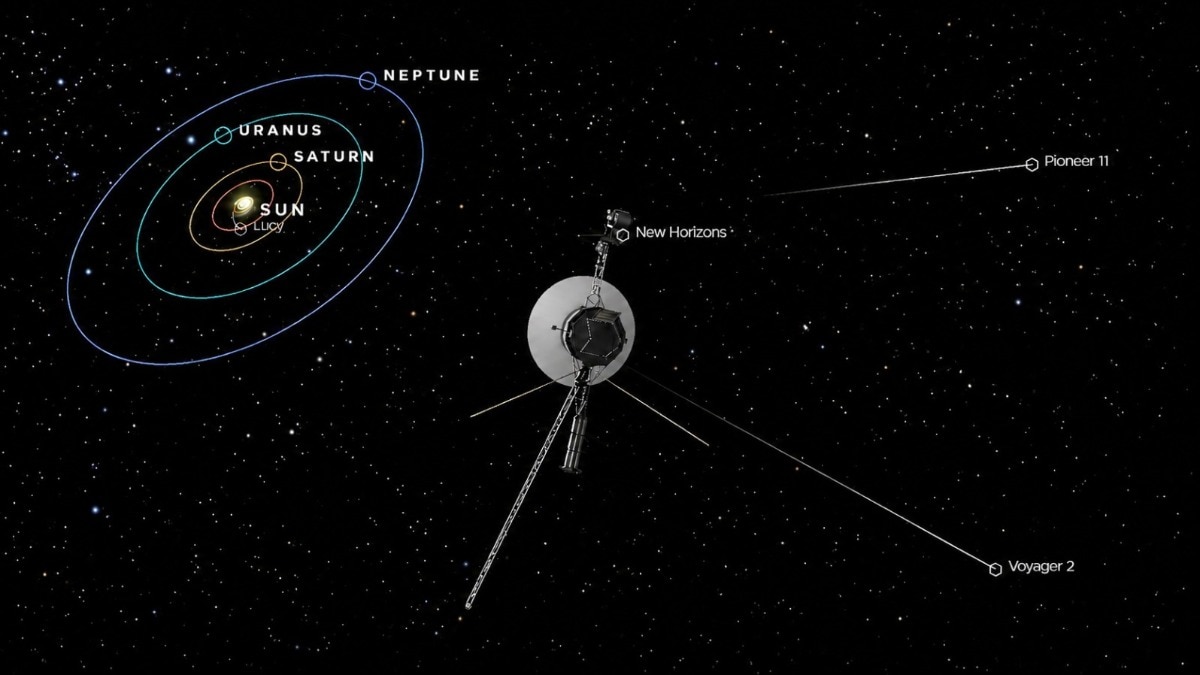
NASA's Voyager 1, a pioneering space probe launched in 1977 to explore the outer reaches of our solar system, has made history by traveling the farthest distance from Earth. On November 18, 2026, at 10:16:07 GMT, Voyager 1 reached a distance of one light day away from Earth, a feat that underscores human ingenuity and curiosity. This achievement also serves as a humbling reminder of our planet's tiny stature in the vast cosmic landscape.
The spacecraft, which has been traveling since its launch, entered interstellar space in August 2012, leaving behind the solar system's protective bubble. Voyager 1's journey has seen it capture significant milestones, including images of planets, comets, and our own "Pale Blue Dot" Earth. The iconic image, taken on February 14, 1990, showed Earth as a mere pixel-sized point of light, symbolizing its fragility in the cosmic ocean.
The Pale Blue Dot image was a poignant reminder of our planet's vulnerability, as envisioned by astronomer Carl Sagan who advocated for its importance. Sagan, who passed away in 1996, believed that the image underscored humanity's responsibility to treat each other kindly and preserve Earth, our only known home. In celebrating Voyager 1's milestone, NASA encouraged people worldwide to send a signal skyward, marking the spacecraft's incredible journey and its historic achievement of reaching one light-day from Earth.
The journey of Voyager 1 continues, reminding us of human potential while offering a humbling perspective on our place in the universe. As we celebrate this milestone, we are also reminded of Sagan's words: "There is perhaps no better demonstration of the folly of human conceits than this distant image of our tiny world."